Call: (03) 7046 5568
SMS/WhatsApp:
0485 085 568
Mon-Fri 9AM-5PM


Choose an outdoor fountain that adds character without making the garden difficult to maintain.
Front gardens in Australia get a lot of sun, a lot of heat, and often not a lot of attention. Most homeowners want something that looks decent year-round without demanding significant time or water. That's a reasonable expectation, and the good news is that modern low-maintenance front yard Australia landscaping has developed into a genuine style category with clear design principles and a solid plant palette to draw from.
The days of wall-to-wall lawn are fading quickly. Too much water, too much mowing, and honestly, too much work for what you get out of it. What's replacing it is more interesting. Gravel and hardscaping, native planting, drought-tolerant groundcovers, structural ornamental grasses, smart use of pots and vertical elements. These approaches look better, cost less to maintain, and handle the Australian climate without fighting it.
Here are ten ideas that work well for Australian front gardens in 2026, whether you're starting from scratch or looking to update what's already there.
 Starting with this one because it's genuinely the most impactful change most front gardens can make. Replacing thirsty exotic plants with drought-tolerant species, particularly Australian natives, cuts water use significantly and reduces the need for fertilising and pest management. Native plants have adapted to local soil and rainfall patterns over thousands of years. They don't need much coaxing.
For an Australian native garden at the front of a property, a few combinations work particularly well. Lomandra varieties like 'Tanika' or 'Nyalla' give a fine, arching grass texture that stays tidy without trimming. Westringia provides a grey-green mound form and small flowers year-round. Grevillea species range from low groundcovers to feature shrubs and most flower for extended periods. Callistemon, Banksia, and Kangaroo paw add colour and structure without demanding constant attention.
The key in a modern Australian garden design context is using these plants in a deliberate, considered way rather than just dotting them around randomly. Three species repeated across the bed tend to read better than ten species used once each. Repetition creates rhythm. And rhythm is basically what separates a designed garden from a collection of plants.
 A water feature in a front garden does two things. It adds sound, which softens a street-facing space considerably, and it adds a focal point that draws the eye in a way that plants alone often don't. The trickle or gentle pour of moving water changes the atmosphere around a front entry. People notice it without always knowing exactly why the space feels different.
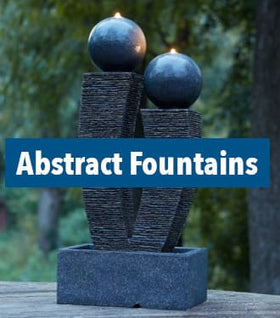
Fountainland has a wide range of water features suited to front garden applications. Our catalogue includes wall-mounted fountain panels that work well on rendered boundary walls, tiered basin fountains for low-maintenance operation, and self-contained pot fountain systems that need no plumbing connection whatsoever. For a low-maintenance front yard Australia setup, a self-contained recirculating water feature is ideal. You top up the water periodically, clear debris every few weeks, and that's basically the entire maintenance schedule for this element.
Garden lighting is worth adding to this conversation because it's so often an afterthought. Uplighting a feature plant or a fountain dramatically extends the visual impact of a front garden into the evening. LED path lights along a driveway edge, a spotlight on a Cycad or a sculptural Agave, or warm lights embedded into a water feature, all of these make a front garden look considered and intentional after dark. Seasonal colour from flowering natives or annuals in pots rounds out this layer without creating ongoing maintenance pressure.

Find a water feature that suits your space, style and budget.
 Minimalist doesn't mean bare. It means edited. A modern low-maintenance front yard Australia design in a minimalist direction makes decisions about what to include and commits to them rather than filling every available space. The result looks deliberate and clean, which reads well from the street.
In practice, this usually means a limited palette of materials, two or three at most. Concrete, corten steel, and gravel. Rendered walls, timber screening, and pavers. The combinations vary, but the discipline is the same. Materials chosen for their texture and longevity rather than for decorative interest. Plants selected for form and structure rather than flower colour. A single feature element, a statement pot, a wall fountain, a mature grass clump, given enough space to actually be noticed.
Small front yard landscaping ideas Australia in a minimalist direction often work best when the hardscaping does the heavy lifting. A well-designed concrete path, a rendered fence with a simple gate, a gravel bed with a few well-spaced plants. Less to maintain, more to look at. The challenge is resisting the urge to add things once the basic layout is done.
 Done well, a rock and gravel garden is one of the most low-maintenance front yard solutions available. Done badly, it looks like someone couldn't be bothered. The difference is mostly in the rock selection and the planting within it.
Use local stone where possible. It looks contextually right and usually costs less than imported material. Boulders of varying sizes placed with intention, not scattered uniformly, create a naturalistic feel. Decomposed granite or crushed gravel in a complementary tone fills the spaces between plantings. Into that base, drought-tolerant plants like Agave, Aloe, Echinocactus, and clumping natives create sculptural interest without needing regular water or pruning.
The weed control membrane question comes up constantly with gravel gardens. A good quality membrane under the gravel significantly reduces ongoing weeding. Don't skip it to save money upfront. You'll regret it in about eight months when the grass starts pushing through. Pegging the membrane properly and covering it with a deep enough layer of gravel, around 70mm minimum, is the step that separates a gravel garden that stays easy from one that becomes a problem.
 A deep mulch garden bed is one of the most underappreciated small front yard landscaping ideas Australia has to offer. Mulch suppresses weeds, retains soil moisture, moderates soil temperature, and improves soil structure as it breaks down. All of those things reduce the amount of work a garden needs from you. And a freshly mulched garden bed looks neat and cared-for with very little effort.
The depth matters. Fifty millimetres is too thin, and the weeds push through quickly. Seventy-five to one hundred millimetres is the useful range. Hardwood or cypress mulch lasts longer than pine bark and is worth the slightly higher cost. Keep mulch pulled back from the base of plant stems to avoid collar rot, especially on natives and succulents that are susceptible to it.
Composting into mulched beds each year improves their performance over time. It's a twenty-minute job annually, and the cumulative benefit to soil health and plant vigour is significant. If there's one low-effort high-return maintenance habit for a front garden, this is probably it.
 Vertical gardens have become more practical and more affordable over the past few years. For a modern front garden, a green wall on a rendered fence or a boundary wall adds vegetation in a space where planting at ground level isn't possible. It's especially useful for properties with narrow verge strips or where the entire front is essentially paving and pathway.
The main consideration for a low-maintenance vertical garden is the irrigation system. A manual vertical garden, one that requires hand watering, will fail. The logistics just don't work long-term. A drip irrigation system fed from a tap with a simple timer is the setup that actually sustains a green wall without creating a daily obligation. The plant selection matters too. Succulents and certain native species handle the conditions of a vertical installation more forgivingly than high-moisture plants.
 Ornamental grasses are probably the most consistently useful plant category for modern front gardens in Australia. They move in the breeze, they're drought-tolerant once established, they provide year-round structure, and they're low maintenance in a genuine rather than aspirational sense. Lomandra, Pennisetum, Dianella, Carex, all of these work across a wide range of Australian climates and soil types.
As a low border along a driveway or a pathway edge, ornamental grasses create definition without requiring edging or trimming. A mass planting of a single species, say a drift of Lomandra 'Tanika' across the front of a garden bed, reads as a confident design decision from the street. And it's a plant that you can basically forget about after establishment. That's modern low-maintenance front yard Australia in practice.
 Paving shouldn't be purely functional. In a modern front garden, the choice of paving material and the pattern it's laid in contributes significantly to the overall character of the space. Concrete pavers in large-format tiles give a clean, contemporary look. Exposed aggregate concrete is warm and textural. Basalt or bluestone has a more refined quality that suits certain architectural styles particularly well.
Small front yard landscaping ideas Australia in the hardscaping direction often work best when the paved area is generous rather than squeezed. A narrow path with garden beds on either side can feel awkward. A wider paved zone with planting at the edges feels more deliberate and is also more functional. If you're going to invest in quality paving materials, give them enough space to actually be seen and appreciated.
 Pots are flexible in a way that in-ground planting isn't. You can move them, swap them seasonally, and take them with you if you move house. For a modern Australian garden design approach, a cluster of pots near a front entry creates a focal point and adds planting without committing to permanent garden beds. Three pots of varying heights planted with complementary species read better than a single pot or a uniform row.
The pot material matters as much as what's in it. Concrete, ceramic, and corten steel all sit well in a modern garden context. Terracotta has its place, but it can look out of step in a more contemporary design. Quality pots last longer and look significantly better than cheap alternatives. It's the kind of thing where spending more upfront saves money and frustration over time. One large quality pot beats three cheap ones in almost every situation.
 The front garden, as purely a display space, is becoming less common. More homeowners are treating part of the front area as a functional zone, a spot to sit in the morning, a small courtyard garden with a chair and a coffee, a place that's actually used rather than just looked at from the street. This shift makes the front garden feel more like part of the home rather than just its face.
A small courtyard garden at the front works best when it has some separation from the street. A low rendered wall, a bamboo screen, a hedge of Westringia, something that creates a sense of enclosure without fully blocking the view. Within that space, a couple of quality chairs, a small water feature from the Fountainland range, simple paving, and a few well-chosen plants are enough. It doesn't need to be large to feel like a proper outdoor room.
For most Australian homes, the front garden represents the first and most consistent impression the property makes. A well-considered modern low-maintenance front yard Australia design adds real value to that impression without demanding much in return. Start with one or two of these ideas and see how the space evolves. Most good gardens are built gradually anyway, not all at once.

Share your garden or indoor-space requirements and get a suitable recommendation.