Call: (03) 7046 5568
SMS/WhatsApp:
0485 085 568
Mon-Fri 9AM-5PM

There's something about a Japanese garden that makes you slow down. The layout, the materials, the quiet of it. It's designed to do exactly that, and it does it well. For Australian homeowners, the appeal has been growing steadily, partly because the aesthetic translates surprisingly well to our climate and partly because people are genuinely looking for outdoor spaces that feel calm rather than just tidy.
Australian gardens tend toward the lush or the native. Japanese design goes a different direction. It works with restraint. Fewer plants, more considered placement, a strong emphasis on rock, water, and empty space used intentionally. That contrast is actually part of why Japanese garden ideas in Australia have become such a searched topic lately. People want something that feels genuinely different from the standard lawn-and-garden setup.
Here are ten ideas that work well for Australian properties, whether you have a large backyard to work with or a compact courtyard that needs a considered transformation.
Japanese garden design is built on a handful of principles that have stayed consistent for centuries. The first is balance, but not symmetry. The two aren't the same thing. A Japanese garden feels balanced without being mirrored, which gives it a natural quality that formal Western gardens sometimes lack.
Wabi-sabi is another one. It's a concept that embraces imperfection and impermanence. A moss-covered stone, a slightly asymmetrical pathway, a tree that leans just a little. These things are considered beautiful rather than problems to fix. That's a significant mindset shift for a lot of Western gardeners who are used to trying to achieve perfection. The other major principle is the idea of ma, the meaningful use of empty space. What you leave out is as important as what you put in.

The three main styles you'll come across are the karesansui, or dry rock garden, the tsukiyama, which incorporates hills and ponds, and the roji, the tea garden pathway style. Karesansui gardens use raked gravel or sand to represent water and carefully placed rocks to represent mountains or islands. They're meditative and low maintenance, which makes them well-suited to Australian native garden adaptations. Tsukiyama gardens require more space and water. The roji style works well in smaller properties as a connecting pathway that creates a sense of journey through the garden.

A dry rock garden, or karesansui, is one of the most achievable Japanese garden ideas for Australian homeowners to work with because it requires relatively little maintenance once it's set up. The basic elements are a raked gravel or decomposed granite base, a few carefully chosen larger rocks, and minimal plantings at the edges. The raking patterns represent water movement and are part of the meditative practice associated with these gardens.
For Australian conditions, decomposed granite works particularly well as a base material. It handles heat and drainage well and doesn't shift around as much as fine gravel in strong wind. Keep the rock selection simple. Three rocks arranged with intention are more effective than a dozen placed randomly.

Water is central to Japanese garden design, even in the dry rock style where it's represented symbolically. For gardens where a real water feature is possible, the sound of moving water changes the whole atmosphere of the space. A bamboo shishi-odoshi, the classic tilting bamboo spout that fills and tips rhythmically, is one of the most recognisable Japanese garden water elements. It's also genuinely calming to sit near.
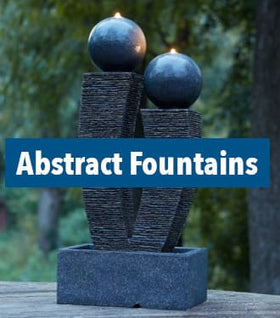
Fountainland offers a solid range of water features suited to Japanese garden design in Australia. Their collection includes tiered stone fountains, bamboo-style water spouts, and basin fountains that fit well within the aesthetic. A water feature doesn't need to be large. A small stone basin with a simple spout can do as much work as a full pond in a compact garden, and Fountainland's smaller models are designed with exactly that kind of courtyard-scale installation in mind.

A small courtyard garden is actually one of the better formats for Japanese design because the style was developed in part to create meaningful spaces within tight boundaries. Japanese townhouse gardens historically worked with very small plots. The goal was to create the impression of a larger, natural landscape within a confined space.
For a small courtyard garden, focus on verticality. A single Japanese maple or bamboo screen draws the eye upward and makes the space feel taller. Keep ground materials simple and consistent. A mix of gravel, stepping stones, and one or two low plantings is usually enough. Too much happening in a small space defeats the purpose of the style entirely.

Japanese maples are probably the most universally recommended tree for Japanese garden design in Australia because they perform reliably in most Australian climates, they're available in a wide range of sizes, and their seasonal colour change adds genuine drama to a garden that otherwise relies on evergreen planting. The fine leaf texture is also distinctly Japanese in character.
In warmer Australian climates, position maples where they get afternoon shade. They can handle full sun in cooler regions, but in Queensland and similar climates, the leaves will scorch without some protection. Container-grown maples work well for courtyard spaces where planting into the ground isn't possible. A single well-chosen maple in a good ceramic pot can be the entire focal point of a small courtyard design.

Bamboo brings both visual and acoustic qualities to a garden. The sound of leaves moving in a breeze is distinctive and genuinely pleasant. As a screening plant, it's effective and fast-growing. In Japanese design, bamboo is used carefully rather than planted in mass. A single clump or a linear screen along a fence line is the typical approach.
The clumping varieties are the practical choice for most Australian homeowners. Running bamboo is invasive and will cause significant problems if it gets into neighbouring properties. Black bamboo, Phyllostachys nigra, is particularly striking with its dark culms, but it runs aggressively. Clumping varieties like Bambusa multiplex are much more manageable and still deliver the aesthetic you're after.

A stepping stone pathway in a Japanese garden isn't just about getting from one place to another. The placement of the stones controls your pace. Stones set close together encourage quick walking. Stones placed further apart slow you down and make you look where you're stepping. That deliberate change in rhythm through a garden is a classic Japanese technique for shaping the experience of moving through a space.
Irregular natural stone, granite, bluestone, or basalt all work well for this purpose. Avoid overly regular or tile-like stones as they lose the organic quality that the style depends on. Set the stones slightly below the surrounding surface so they sit into the garden rather than sitting on top of it. That detail makes a significant visual difference.
Stone lanterns, or toro, are one of the most recognisable Japanese garden elements. Originally used to light pathways at temples and shrines, they work in residential gardens as focal points or markers along a path. They're best used sparingly. One or two well-placed lanterns is the right approach. A garden full of ornaments stops being Japanese and starts being a souvenir shop.
For Australian conditions, granite lanterns are the most durable. Sandstone and reconstituted stone versions are cheaper but deteriorate faster under the sun and rain. A quality stone lantern, placed at the edge of a planting bed or at a junction in a pathway, will last for decades with no maintenance and looks better as it ages and develops a moss patina.

A roji-style tea garden is built around the pathway to a tea house, but you don't need an actual tea house to use the design principles. A dedicated corner of the garden with a stepping stone path, a stone water basin, a small lantern, and simple moss or fern planting around the edges captures the essence of the style in a small footprint.
The water basin, called a tsukubai, is central to this kind of garden. It's traditionally used for ritual hand washing before a tea ceremony, but in a garden setting, it functions as a focal point and a water sound element. Fountainland stocks stone basin water features that work well in exactly this context. Pair one with a small bamboo spout and low surrounding planting, and you have a genuinely considered garden corner that feels complete.

Moss gardens are stunning in the right conditions. The problem in most Australian climates is that true moss is difficult to maintain. It needs consistent moisture and shade, which most Australian gardens don't naturally provide. The practical alternative is to use moss-like groundcovers that tolerate more sun and dry periods. Baby's tears, Soleirolia soleirolii, works in shadier spots. Pratia and some of the low creeping thymes give a similar visual texture in sunnier positions.
In the cooler parts of Australia, true moss is more achievable. Southern Victoria, Tasmania, and parts of the ACT have the climate for it. For everyone else, selecting groundcovers that give the right visual texture without demanding constant irrigation is the smarter approach. The effect, once established, is genuinely beautiful and requires very little ongoing attention.

This is an approach that works particularly well for the Australian context. Strict Japanese garden design uses specific Japanese plant species that aren't always suited to Australian conditions. Adapting the aesthetic using Australian native garden plants can produce something that's both contextually appropriate and genuinely striking.
Native grasses like Lomandra and Poa work well in place of traditional Japanese sedges. Grevillea species with fine foliage can substitute for Japanese maples in warmer climates. Native ferns for shaded areas, Casuarina for movement and sound, Kangaroo paws for sculptural form. The key is applying Japanese design principles, restraint, balance, and considered placement to a plant palette that makes sense for where you actually live. Some of the best Japanese garden design Australia examples take exactly this hybrid approach.
One of the genuine advantages of Japanese garden design is that a well-executed garden is actually easier to maintain than a traditional mixed planting scheme. The dry rock garden is the extreme version of this. Once the gravel is laid and the rocks are placed, maintenance is minimal. Weeding in a well-mulched or gravelled area is straightforward, and there's no lawn to mow.
For low-maintenance Japanese garden design, choose plants that are suited to your specific climate without modification. A Japanese maple that needs afternoon shade in your region will create ongoing work if you plant it in a position that doesn't give it that protection. Plant selection suited to your conditions reduces watering, rescue pruning, and plant replacement significantly.
Simplify the plant palette. Three species used throughout a garden is easier to maintain than fifteen species used once each. Repetition is actually a Japanese design principle anyway. Using the same plant in multiple locations creates cohesion and reduces the complexity of care schedules. Water features need periodic cleaning, but a simple recirculating pump requires very little beyond keeping the water level topped up and clearing debris every few weeks.
A small courtyard garden might honestly be the ideal format for Japanese design. The style was developed in urban contexts where space was limited, and the discipline that comes from working within tight boundaries tends to produce more considered results than having unlimited room to work with.
In a compact space, every element needs to earn its place. One tree, one water feature, one lantern, a pathway, and simple ground covering. That's a complete garden. Adding more elements doesn't improve it. For a balcony or a very small courtyard, container planting with a single small fountain from the Fountainland range and two or three carefully chosen plants in quality pots can deliver a genuine Japanese garden atmosphere without requiring any ground planting at all.
Vertical elements help enormously in small spaces. A bamboo screen along one wall, a wall-mounted water spout feeding into a ground basin, a Japanese maple in a tall ceramic pot. These draw the eye upward and create a sense of depth and height that makes a small space feel more generous. Keep the floor treatment consistent. One material throughout, whether that's gravel, stone pavers, or timber decking, reads as larger than mixed materials.
Japanese garden plants Australia growers commonly work with include Japanese maple, mondo grass, bamboo, azalea, camellia, and various fern species. These perform well across most temperate Australian regions. For tropical and subtropical areas, the palette shifts. Clumping bamboo, tropical ferns, Agave, and Dracaena can give the structural quality Japanese design relies on in conditions where traditional Japanese species struggle.
Azaleas and camellias are important in traditional Japanese planting, and both adapt well to most Australian gardens. They prefer slightly acidic, well-drained soil and some shade protection in the afternoon in warmer regions. Mondo grass, Ophiopogon japonicus, is one of the most useful ground-level plants for this style. It's tough, stays neat without much intervention, and gives the fine-textured groundcover look that Japanese gardens use consistently.
For a genuinely low-maintenance Japanese garden plants approach, supplementing the traditional species with well-chosen natives is worth considering. Fine-leaved native grasses, compact Lomandra varieties, and low-growing native ferns can all be integrated without breaking the visual character of the design. The discipline of Japanese aesthetics can be applied to almost any plant material, as long as the selection is restrained and the placement is considered.